
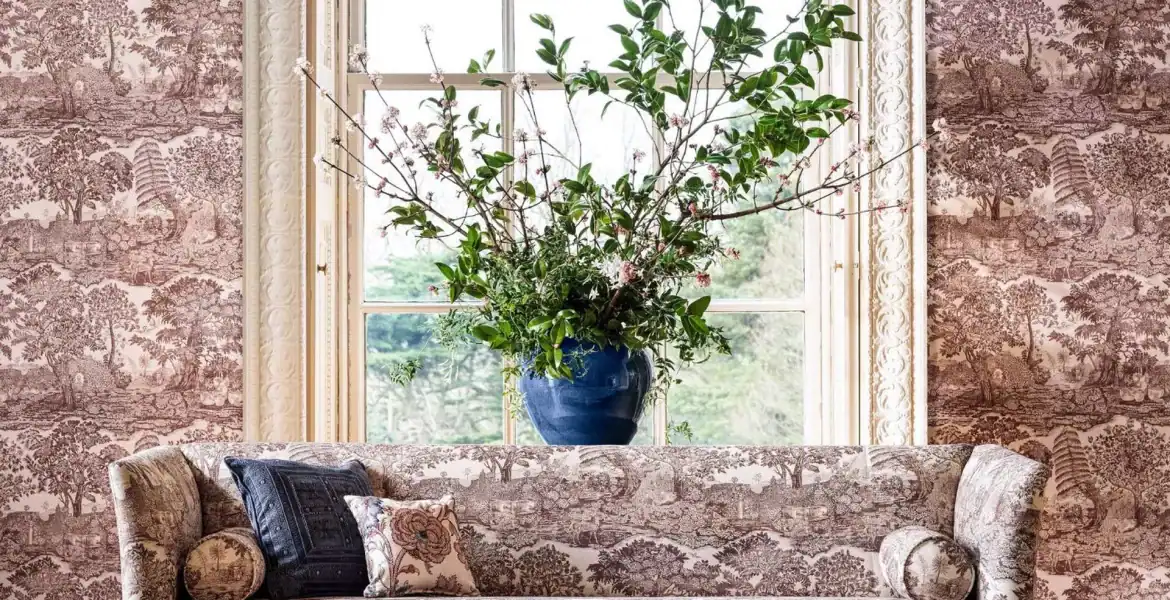
Quand on parle de papier peint anglais haut de gamme, le nom Sanderson revient systématiquement. Depuis 1860, cette maison britannique crée des motifs floraux et botaniques qui définissent l’élégance à l’anglaise.
Leur dernière collection, Highgrove by Sanderson, va encore plus loin : elle reproduit fidèlement les jardins personnels du Roi Charles III. Chez Empire Wallpaper à Montréal, nous sommes fiers d’offrir cette collection exceptionnelle à nos clients québécois qui recherchent un papier peint de luxe avec une vraie histoire.
Cet article vous guide à travers les 42 modèles de la collection pour vous aider à choisir le design parfait pour votre projet de décoration ou de rénovation.
Telechargez le Catalog Ici
Une Collection Crée: en Partenariat avec la King's Foundation
Guide Complet des 42 Papiers Peints Highgrove

La collection se divise en plusieurs familles, chacune inspirée par une zone différente des jardins. Voici un tour complet pour vous aider à naviguer dans toutes les options.
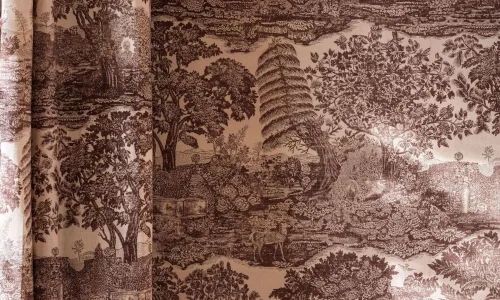
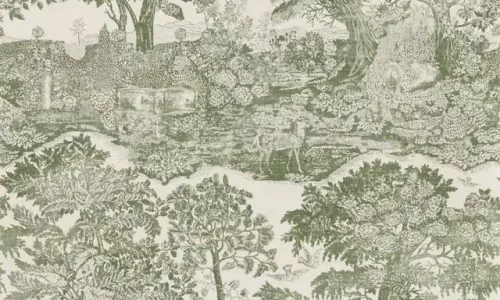
Highgrove Toile : Le Classique Narratif
Quatre couleurs disponibles :
- Highgrove Toile Oak
- Brun chêne profond, très masculin et chaleureux
- Highgrove Toile Yew Green
- Vert vif, classique et apaisant
- Highgrove Toile Tetbury Blue
- Bleu poudré élégant
- Highgrove Toile Madder Rose
- Rose ancien, romantique sans être trop sucré
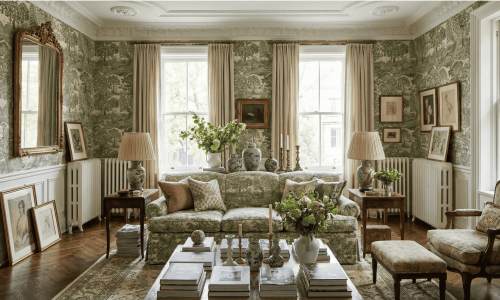
Les maisons patrimoniales de Westmount et Outremont, véritables joyaux du patrimoine architectural montréalais, trouvent dans la collection Highgrove un allié parfait pour leur décoration d’époque.
Ces résidences historiques aux moulures originales et plafonds hauts se marient magnifiquement avec les motifs floraux anglais de Sanderson. Que vous rénoviez une maison victorienne à Westmount ou restauriez un héritage architectural du Golden Square Mile, le papier peint Highgrove respecte l’authenticité du design patrimonial tout en apportant une élégance britannique intemporelle.
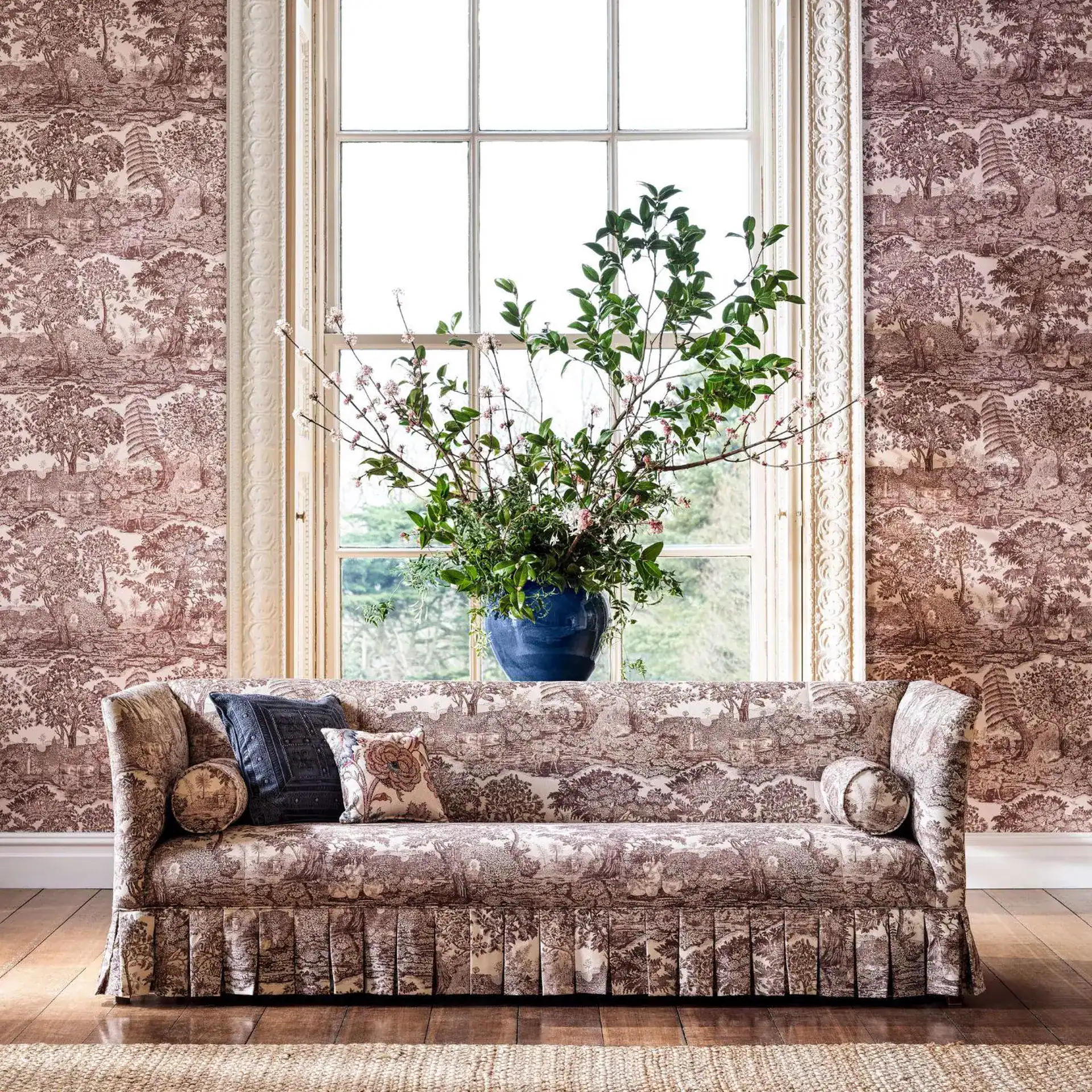
La Toile fonctionne magnifiquement dans les maisons anciennes de Montréal (Outremont, Westmount) où elle respecte l’architecture d’époque tout en apportant une fraîcheur contemporaine.
La Collection Florale :
Des Fleurs des Jardins Royaux
Les motifs floraux de cette collection varient dans leur approche artistique, allant d’illustrations botaniques précises à des bouquets luxuriants et picturaux, reflétant la diversité des plantations à Highgrove.
Prairie de Fleurs Sauvages (Wildflower Meadow)
Ce design est l’un des plus emblématiques de l’engagement écologique de Highgrove. Il s’éloigne des motifs floraux rigides pour adopter un style naturaliste et dispersé, imitant la spontanéité d’une prairie anglaise en pleine floraison. Sanderson utilise ici une technique d’impression qui préserve la délicatesse des traits faits à la main.
Érable (Maple) : Ce coloris évoque la “lumière dorée” des fins d’été. C’est un choix stratégique pour créer une sensation de chaleur et de pérennité dans les espaces de vie.
Vert Vif (Going Green) : Ce mot-clé cher à Sanderson souligne la vitalité du printemps. Sur un support intissé (non-woven) de haute qualité, ce papier peint offre une profondeur de couleur exceptionnelle tout en étant facile à poser (“paste-the-wall”).
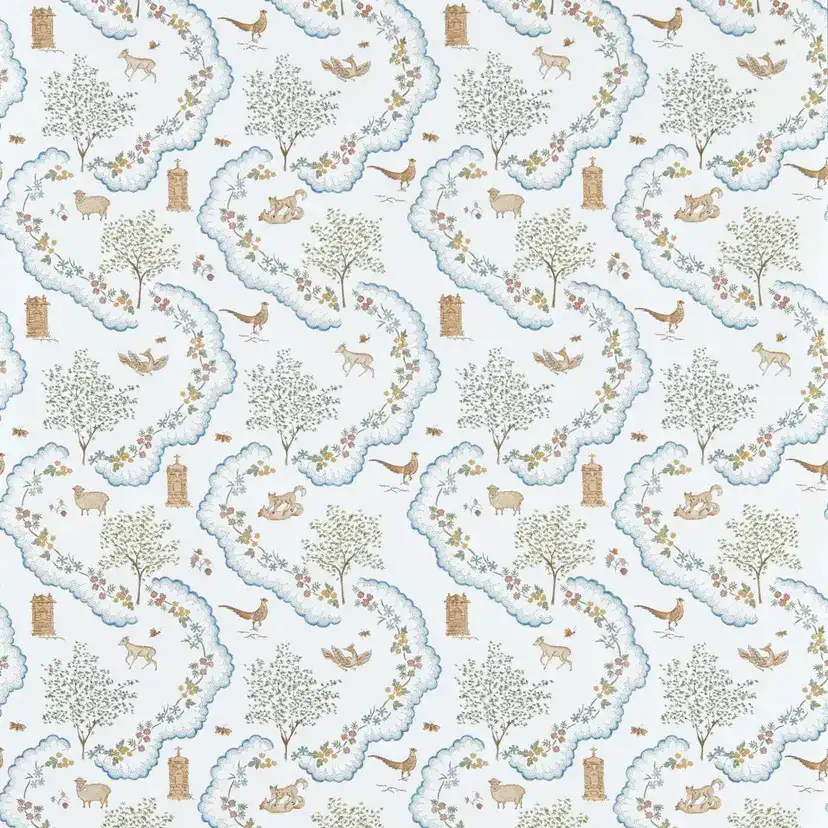
Apothecary Rose
Hommage à la Rosa gallica, ce motif puise dans la tradition des jardins de remèdes. Sanderson met l’accent sur la fidélité botanique, où chaque pétale et chaque tige sont rendus avec une précision quasi-scientifique. C’est le motif idéal pour ceux qui recherchent un “héritage décoratif” qui ne se démode jamais.
Bleus Éthérés (Ether Blues) : Une teinte signature qui apporte une “douceur atmosphérique”.
Parchemin/Olivine : Ce mélange de tons neutres et de verts “Olive” reflète la palette terreuse des archives historiques de Sanderson.
Chintz Rose : Exclusivité papier peint, ce coloris célèbre le romantisme intemporel du jardin anglais, parfait pour une chambre de maître ou un boudoir.
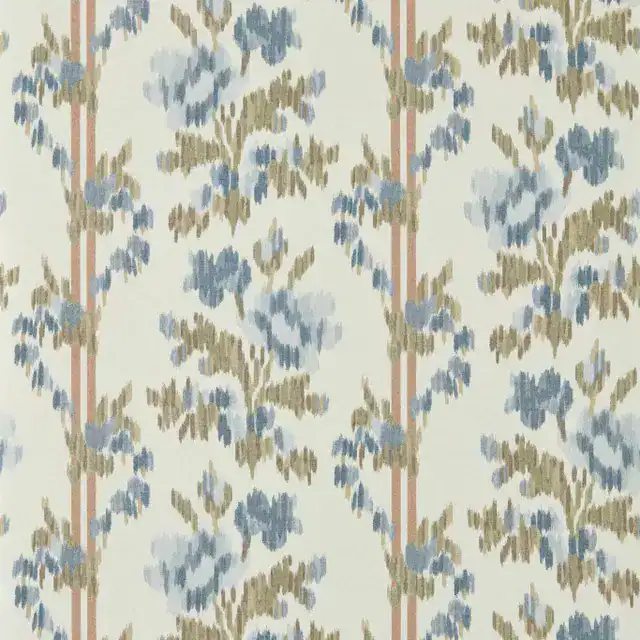
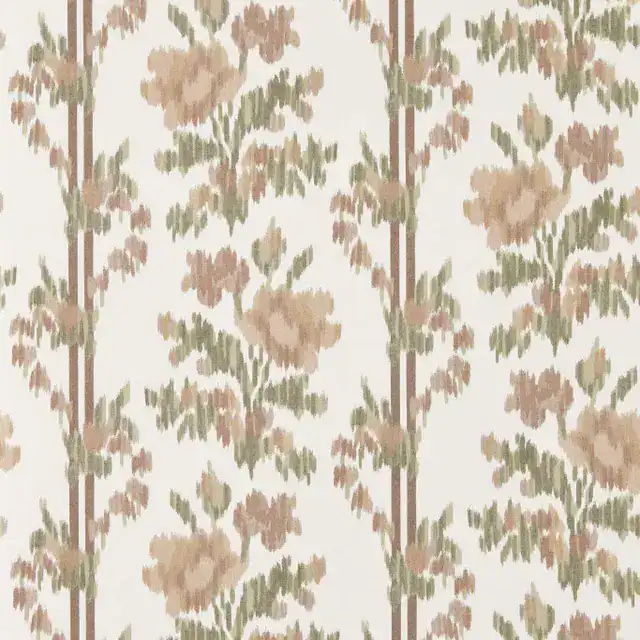
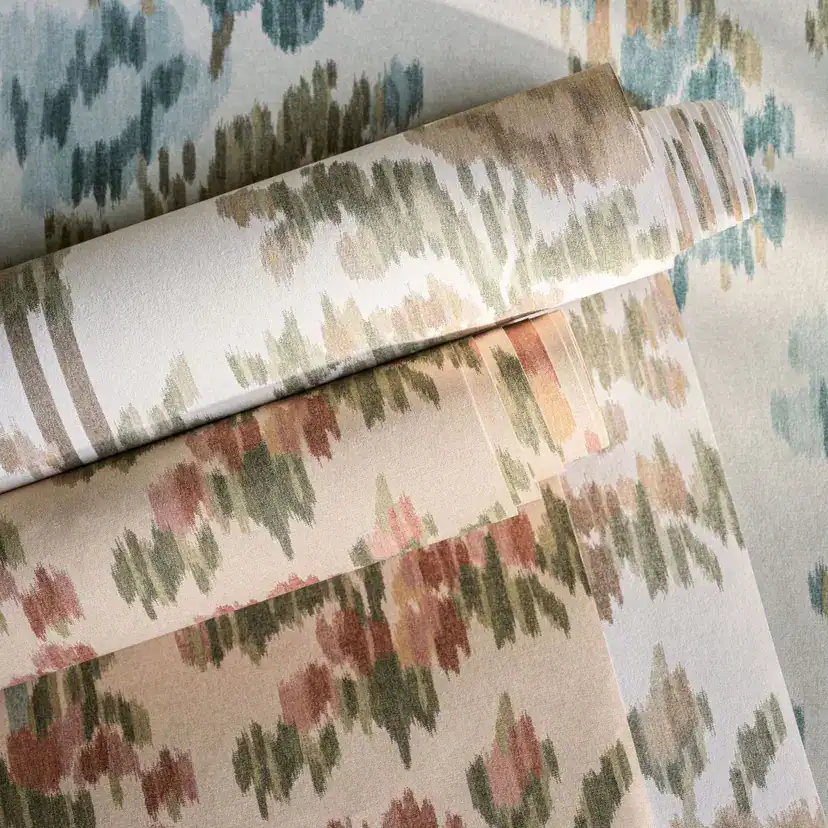
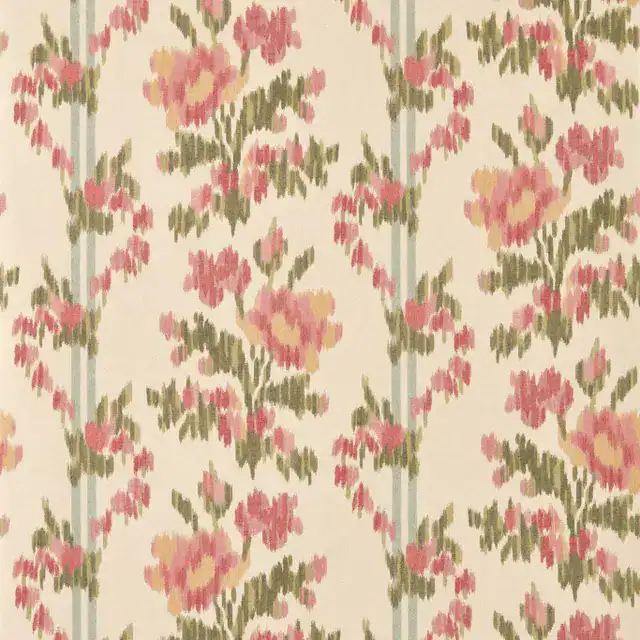
Salisbury : L'Élégance Géométrique et l'Harmonie Florale
Le modèle Salisbury est l’un des designs les plus sophistiqués de la collection Highgrove by Sanderson. Contrairement aux scènes narratives comme le Ancient Apple Orchard, Salisbury se concentre sur la symétrie et la structure, offrant un motif floral stylisé qui rappelle les ornements architecturaux et les treillis classiques que l’on retrouve dans les jardins anglais les plus prestigieux.
Inspiré par l’esthétique du domaine de Highgrove, ce papier peint est une interprétation moderne du motif “diaper” (motif en losange ou en treillis). Il a été conçu pour apporter une sensation d’ordre et de calme. La force de Salisbury réside dans son équilibre : il est assez détaillé pour captiver le regard de près, mais assez structuré pour servir de toile de fond neutre et élégante dans une pièce complète.
Le modèle Salisbury se décline dans les coloris emblématiques de la collaboration avec The King’s Foundation, chacun utilisant des pigments mats pour un fini profond :
Tetbury Blue : Un bleu classique et serein, hommage à la ville de Tetbury proche de Highgrove. Il apporte une autorité tranquille aux bureaux ou bibliothèques.
Madder Rose : Un rouge historique (Garance) adouci, qui évoque les teintes naturelles des jardins de cottage et crée une atmosphère chaleureuse et accueillante.
Yew Green (Vert If) : Un vert profond et intemporel qui reflète les haies sculptées du jardin de Highgrove, idéal pour un salon de réception ou une entrée prestigieuse
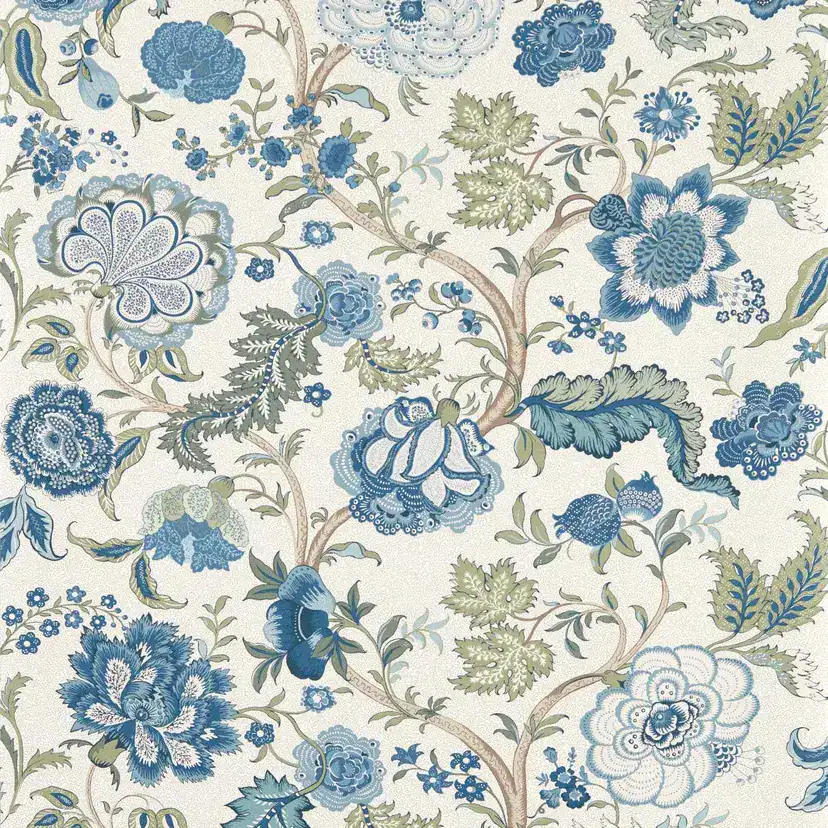

La Collection Botanique :
Une Étude de la Forme et du Feuillage
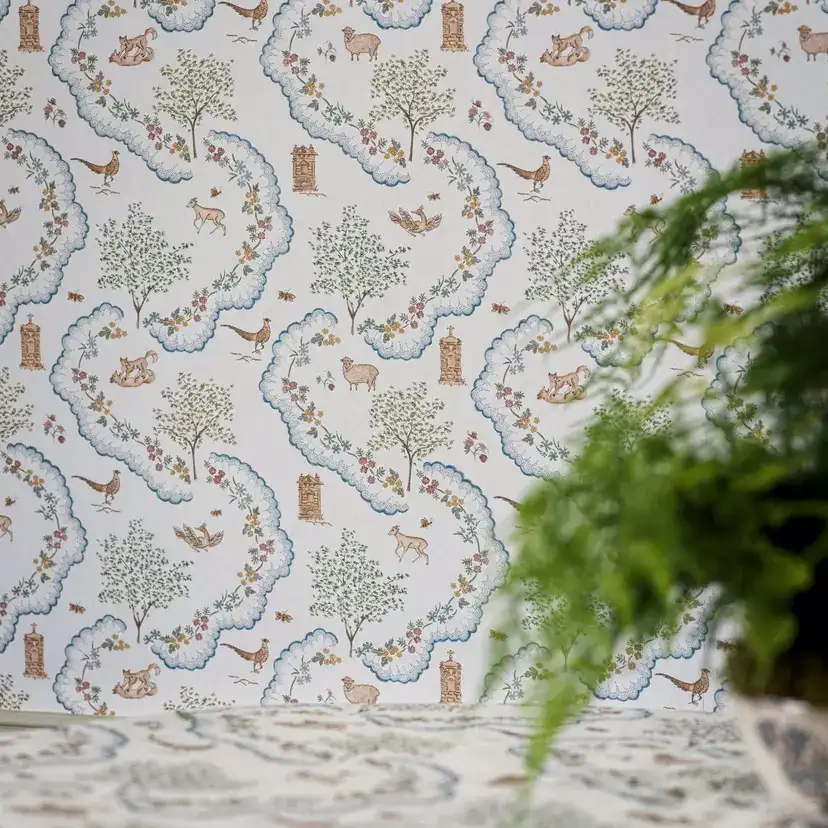
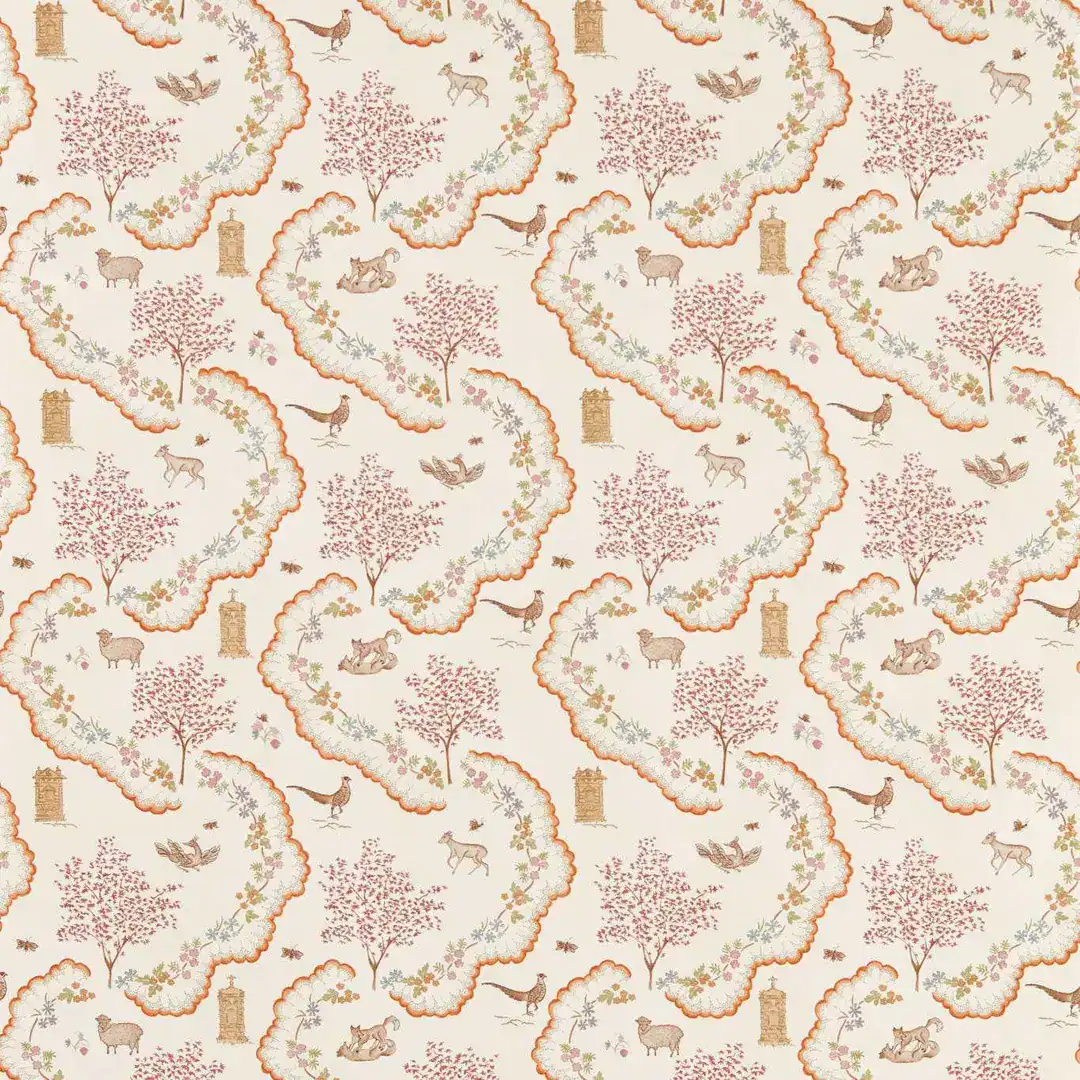
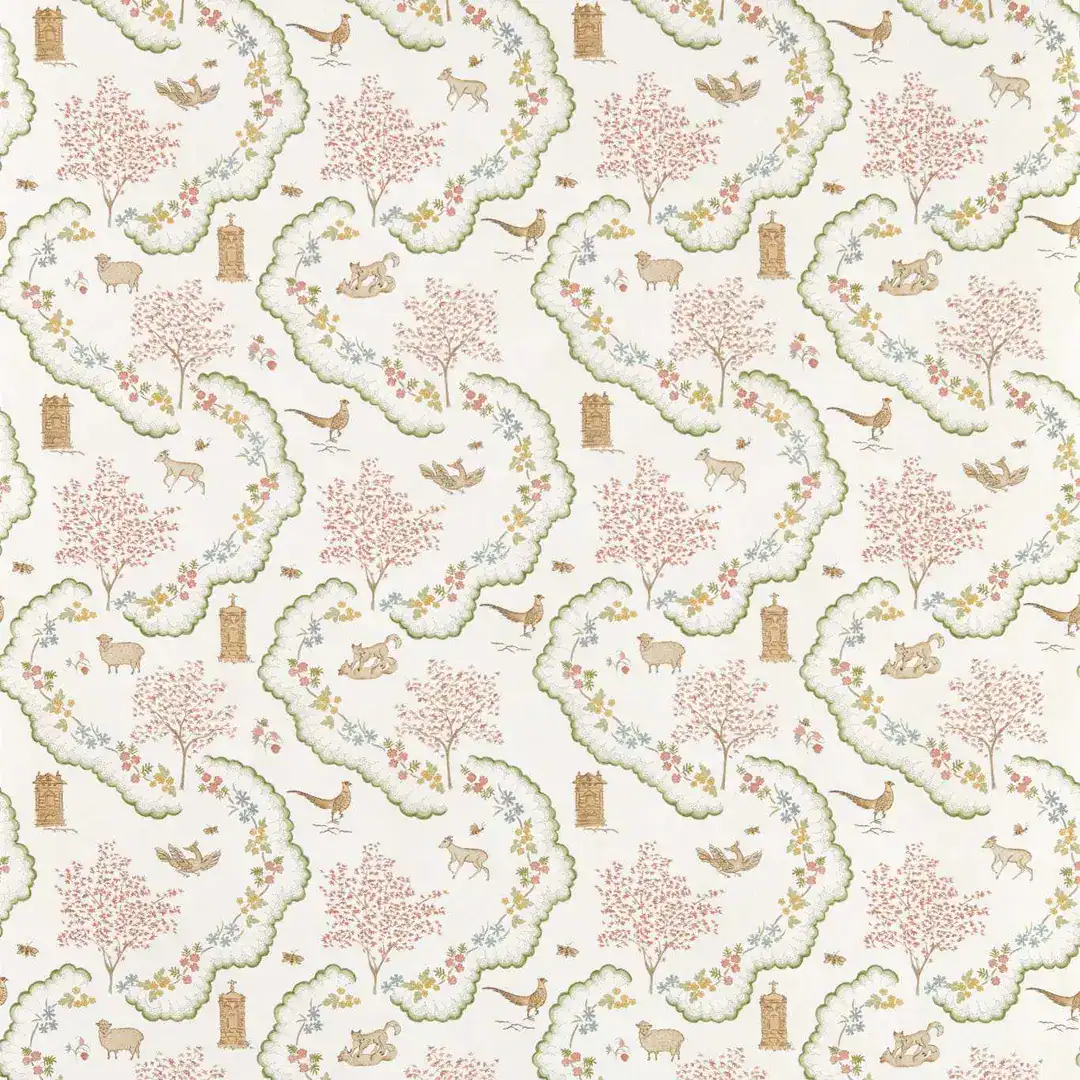
Ancien Verger de Pommiers
Ancient Apple Orchard
Ce motif capture l’âme du verger de Highgrove avec une esthétique que Sanderson qualifie de “naïve et artisanale”. Rappelant l’art populaire du XIXe siècle, ce design narratif est peuplé d’oiseaux et d’arbres stylisés, créant un environnement protecteur et immersif.
Nœud Doré & Sauge (Golden Knot & Sage) : Une alliance chromatique qui ancre la pièce dans une réalité organique et rassurante.
Wedgwood : Un clin d’œil à la porcelaine fine britannique, offrant une clarté graphique qui souligne la précision du dessin.
Minuit (Midnight) : Un bleu profond et dramatique qui transforme le mur en une scène nocturne, idéal pour créer une salle à manger ou un cabinet de travail spectaculaire.


The Stumpery : Une Immersion Texturée dans le Jardin de Highgrove
Le modèle The Stumpery (coloris Lichen) est sans doute la pièce la plus atmosphérique de la collection Highgrove by Sanderson. Plus qu’un simple motif botanique, il s’agit d’une œuvre narrative qui capture l’essence de la “Soucherie” de Highgrove un concept victorien où la vie renaît des souches d’arbres et des racines entrelacées.

Le modèle The Stumpery (coloris Lichen) est sans doute la pièce la plus atmosphérique de la collection Highgrove by Sanderson. Plus qu’un simple motif botanique, il s’agit d’une œuvre narrative qui capture l’essence de la “Soucherie” de Highgrove un concept victorien où la vie renaît des souches d’arbres et des racines entrelacées.
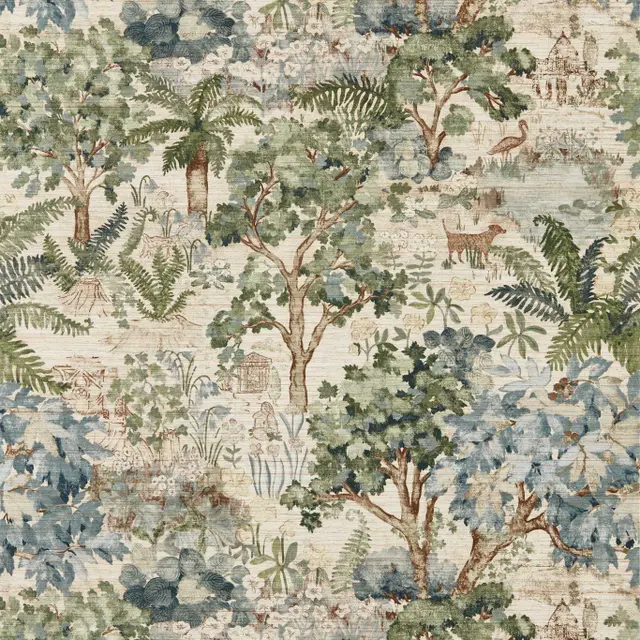
Le Contexte : Une Scène Narrative Royale
Ce design ne se contente pas de dessiner des plantes ; il raconte une histoire. On y retrouve des éléments architecturaux et sculpturaux réels du domaine :
Le Temple Classique : Construit en chêne vert.
La Cabane dans l’Arbre : Avec son toit de chaume emblématique.
La Nymphe des Bois : La sculpture “Goddess of the Wood” qui veille sur le jardin. Le coloris Lichen offre une palette de verts sourds et organiques, imitant la mousse et les fougères qui s’épanouissent dans les zones d’ombre du domaine.
Grande Largeur (Wide Width) : Contrairement aux rouleaux standards de 52 cm, The Stumpery est un papier peint de 68,6 cm de large. Cela permet de réduire le nombre de joints sur le mur, offrant un rendu plus fluide et luxueux.
Texture Effet Grasscloth : Ce papier a été adapté avec un fini texturé rappelant le sisal ou le tissu d’herbe. Cette texture donne une dimension tactile au mur et une profondeur que l’impression à plat ne peut atteindre.
Raccord Sauté (Straight Match) : Avec un raccord vertical de 120,9 cm, ce motif crée une fresque immersive majestueuse. Il est impératif d’utiliser la technique d’encollage au mur pour manipuler ce papier de haute qualité avec précision.
Stumpery de Highgrove Collection
En tant qu’experts, nous recommandons ce modèle pour transformer des espaces souvent négligés en véritables sanctuaires. Le coloris Lichen agit comme un “caméléon chromatique” : il apporte de la fraîcheur dans une pièce lumineuse et une profondeur protectrice dans une pièce plus sombre comme un bureau ou une salle à manger intime.
Thyme Walk & Silver Lime : L'Essence du Jardin de Highgrove
La série Jardin au sein de la collection Highgrove capture les moments de transition du domaine : du parfum des allées d’herbes aromatiques à la lueur argentée des arbres majestueux sous la lumière du matin. Ces papiers peints intissés sont conçus pour apporter une “respiration” organique aux intérieurs urbains et classiques.
Thyme Walk (L’Allée de Thym)
Le modèle Thyme Walk est une célébration de l’un des chemins les plus célèbres de Highgrove. Ce motif ne se contente pas de représenter une plante ; il symbolise le passage du temps et la structure méticuleuse des jardins de Sa Majesté.
Le Design : Il s’agit d’un motif répétitif et texturé qui imite la croissance dense et moutonnante du thym. Sa structure graphique, bien qu’organique, apporte une régularité apaisante, idéale pour les cuisines, les salles à manger ou les jardins d’hiver.
L’Impact : Grâce à son échelle moyenne, il agit comme un “neutre texturé”. Il donne de la profondeur au mur sans l’encombrer visuellement.
Coloris Clés : * Lichen/Gooseberry : Un vert doux et acidulé qui illumine les espaces sombres.
Damson/Quince : Une teinte plus riche et terreuse, parfaite pour créer une atmosphère de “cocooning” historique.
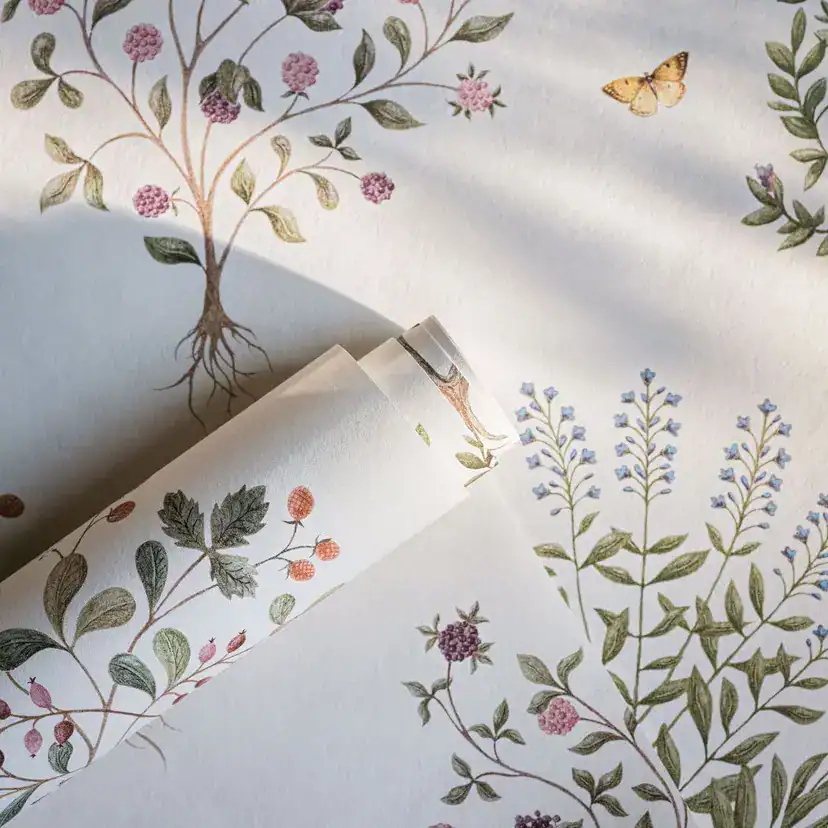
Silver Lime (Tilleul Argenté)
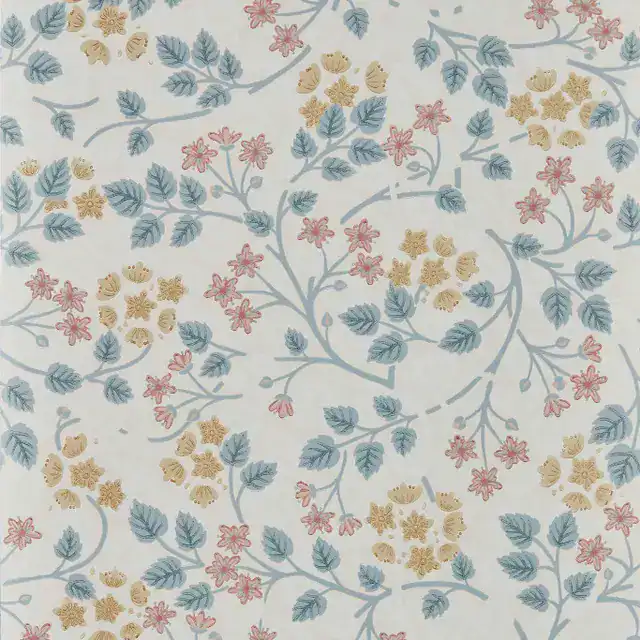
Inspiré par le Tilia tomentosa (Tilleul Argenté) qui borde les allées du domaine, ce papier peint est une étude sur la réflexion de la lumière et le mouvement des feuilles.
Le Design : Le motif présente des feuilles de tilleul élégantes, capturées dans un style qui rappelle les gravures botaniques de l’époque victorienne. Le nom “Silver Lime” provient de la face inférieure argentée des feuilles de cet arbre, un détail que Sanderson a magnifiquement retranscrit.
L’Impact : C’est un papier peint qui joue avec la luminosité de la pièce. Il est particulièrement recommandé pour les chambres à coucher et les salons de réception où l’on souhaite une sensation de légèreté et d’élégance naturelle.
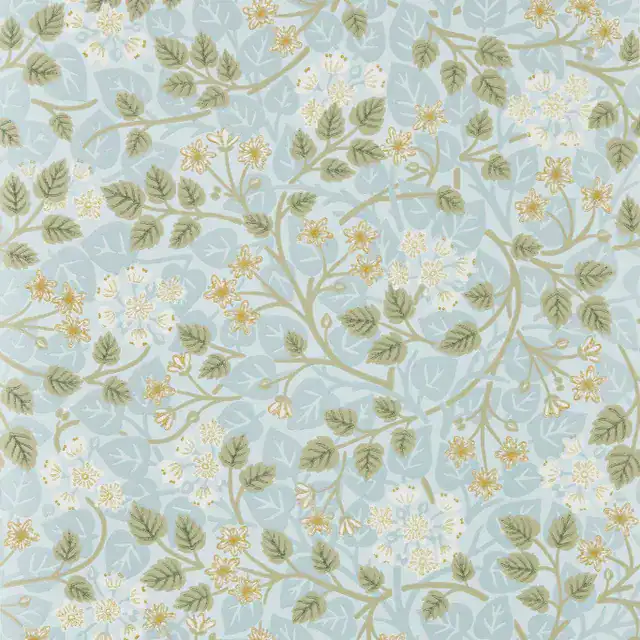
Coloris Clés
Gritstone/Rose : Une alliance minérale et florale très douce.
Lichen & Nymph : Des tons de vert d’eau et de sauge qui évoquent la fraîcheur du jardin après la pluie.
Mineral/Gooseberry : Une version contemporaine et lumineuse qui s’adapte aux intérieurs modernes.
Spécifications Techniques et Engagement Écologique
En tant que distributeur agréé de la gamme Highgrove by Sanderson, nous garantissons la supériorité technique de ces produits :
Qualité Intissée (Non-Woven) : Tous les modèles Thyme Walk et Silver Lime sont imprimés sur un support intissé robuste. La technique “Paste-the-Wall” (encollage au mur) assure une pose propre et rapide, sans dilatation du papier.
Durabilité : Certifiés FSC, ces papiers peints utilisent des encres à base d’eau, sans solvants chimiques, reflétant l’engagement de The King’s Foundation pour un design durable et conscient.
Entretien : Ces revêtements sont épongeables, garantissant une longévité esthétique même dans les zones de vie actives
Highgrove Arboretum:
Une Fresque Murale d'Exception
:fill(white)/https://www.sanderson.design/static/media/catalog/product/D/H/DHIP217513_0fcb.jpg)
Le modèle Highgrove Arboretum (coloris Ether Blues) représente le sommet artistique de la collection Highgrove by Sanderson. Plus qu’un papier peint, il s’agit d’un Mural sur rouleau (Mural on a roll) peint à la main, rendant hommage aux paysages forestiers les plus majestueux du domaine royal. Ce design est une pièce d’archive vivante, conçue pour transformer n’importe quel espace en un sanctuaire botanique immersif.
Inspiré par plusieurs papiers peints panoramiques historiques conservés dans les archives de Sanderson, ce mural illustre les essences d’arbres précieuses cultivées à Highgrove :
Botanique Précise : Le dessin met en scène des érables japonais, des hêtres et des érables (acer).
Le Don de la Reine Mère : Un détail hautement symbolique figure dans le mural : les trois bouleaux (birch trees) offerts par la Reine Mère, encadrant le “Sanctuaire” de Sa Majesté.
Une Floraison Luxuriante : Le paysage est complété par une profusion d’hortensias, de rhododendrons, de magnolias et les célèbres fleurs “The Daughters of Odessa”.